
What Is Non-Extraction Orthodontic Treatment? Benefits Explained
Written by Dr Mustafa, Specialist Orthodontist · PhD · GDC No. 105727
The Benefits of Non-Extraction Orthodontic Treatment
At our orthodontic clinic, we believe in creating beautiful, healthy smiles using the most appropriate and gentle approach for each patient. One option we often consider is non-extraction orthodontic treatment, a method that straightens your teeth without removing any permanent teeth. When suitable, this treatment can offer many benefits for both your smile and overall health.
Why Choose Non-Extraction Treatment?
1. Keep All Your Natural Teeth
Non-extraction treatment means no healthy teeth are removed. This helps preserve your natural bite and jaw shape. It also avoids some of the possible downsides of extractions, such as:
2. Improved Facial Appearance
Keeping all your teeth helps support your lips and facial structure, which can result in:
This is especially important for patients who want to maintain or enhance their facial aesthetics during treatment.
3. Simpler and Sometimes Faster Treatment
In many cases, treatment without extractions:
4. Peace of Mind for Patients and Parents
Many people feel more comfortable knowing that no teeth will be pulled. Non-extraction treatment is often seen as a less invasive and more natural option, especially for teens and child orthodontic treatment.
5. Better Breathing and Speech Support
By keeping all teeth and properly developing the dental arches, this approach can:
6. More Stable Results in Some Cases
When the dental arches are properly developed and the teeth are aligned without extractions, it can lead to:
When Is Non-Extraction the Right Choice?
Non-extraction treatment can be a great choice for patients with:
Not Always the Best Fit
While non-extraction treatment has many advantages, it’s not right for everyone. Trying to avoid extractions when they’re really needed can cause problems like:
That’s why every patient needs a personalized exam and diagnosis. Our experienced orthodontists will carefully study your teeth, jaws, and facial structure to recommend the best plan—whether that includes extractions or not.
Ready to Learn More?
If you or your child is considering metal fixed braces or clear braces, we’d love to help you understand your options. Contact our clinic today to schedule a consultation and find out if non-extraction treatment is right for your smile!
Supporting References for Non-Extraction Orthodontic Treatment
1. Proffit, W. R., Fields, H. W., & Sarver, D. M.
Contemporary Orthodontics, 6th Edition, Elsevier, 2018.
2. Little, R. M., Riedel, R. A., & Artun, J.
“Stability and relapse of mandibular anterior alignment: first premolar extraction cases treated by traditional edgewise orthodontics.”
American Journal of Orthodontics and Dentofacial Orthopedics, Vol. 96, No. 4, 1989, pp. 423-427.
3. Tausche, E., Luck, O., Harzer, W., & Harzer, W.
“Effects of extraction and nonextraction treatment on facial soft tissue profile.”
European Journal of Orthodontics, Vol. 25, No. 4, 2003, pp. 343-349.
4. O’Brien, K., et al.
“The effectiveness of early orthodontic treatment with the Twin-block appliance: a randomized controlled trial.”
The Angle Orthodontist, Vol. 78, No. 3, 2008, pp. 582-589.
5. Cozza, P., Baccetti, T., De Toffol, L., Franchi, L., & McNamara, J. A. Jr.
“Timing of early orthodontic treatment for Class II malocclusion.”
American Journal of Orthodontics and Dentofacial Orthopedics, Vol. 124, No. 3, 2003, pp. 265-272.
6. Huang, Y. F., Tseng, Y. C., Chen, C. H., & Lai, E. H.
“Upper airway changes in children with Class II malocclusion treated with Twin-block appliances.”
European Journal of Orthodontics, Vol. 39, No. 6, 2017, pp. 621-627.
7. Little, R. M.
“Stability and relapse of dental arch alignment.”
British Journal of Orthodontics, Vol. 19, No. 4, 1992, pp. 235-241.
Summary of Proffit, W. R., Fields, H. W., & Sarver, D. M., 2018
Contemporary Orthodontics, 6th Edition, Elsevier
This comprehensive textbook is a cornerstone in orthodontic education and clinical practice. It provides an in-depth overview of how orthodontists diagnose and plan treatments, emphasizing both biological function and facial aesthetics.
The authors carefully compare extraction and non-extraction treatment approaches, outlining when each method is most appropriate. Key considerations include the patient’s jaw structure, facial profile, amount of crowding, and long-term stability. The book highlights that non-extraction treatment—when properly indicated—can help preserve facial fullness, maintain airway space, and reduce risks like root resorption and bone loss.
It reinforces the importance of personalized treatment planning and supports the growing trend of choosing non-extraction methods when they can deliver both functional and aesthetic benefits.
Summary of Little, R. M., Riedel, R. A., & Artun, J., 1989
“Stability and relapse of mandibular anterior alignment: first premolar extraction cases treated by traditional edgewise orthodontics.”
American Journal of Orthodontics and Dentofacial Orthopedics, Vol. 96, No. 4, 1989, pp. 423–427.
This classic study looked at how stable lower front teeth (mandibular anterior teeth) remain after orthodontic treatment involving the extraction of first premolars. The research followed patients long after their treatment was completed.
The findings showed that many of these patients experienced relapse, meaning their teeth began to shift back out of alignment over time—even when treatment was done properly using traditional techniques. The study raised concerns about the long-term stability of extraction-based treatments, especially in the lower front teeth.
It suggests that, when possible, avoiding extractions and maintaining or developing the natural dental arch may lead to more stable and lasting results—an important consideration in treatment planning.
Summary of Tausche et al., 2003
“Effects of extraction and nonextraction treatment on facial soft tissue profile.”
European Journal of Orthodontics, Vol. 25, No. 4, 2003, pp. 343-349.
This study examined how orthodontic treatment with and without tooth extractions affects a person’s facial appearance, specifically the soft tissue profile (such as lips and facial contours). The researchers compared two groups of patients—those treated with tooth extractions and those treated using a non-extraction approach.
They found that non-extraction treatment generally preserved fuller lips and a more natural, balanced facial profile, while extraction treatment was more likely to lead to a flatter appearance of the mid-face and lips. These changes were especially noticeable in patients with borderline cases, where extractions weren’t clearly necessary.
The study concludes that non-extraction orthodontics can offer better outcomes in terms of facial aesthetics, especially when the patient already has a well-balanced profile.
Summary of O’Brien et al., 2008
“The effectiveness of early orthodontic treatment with the Twin-block appliance: a randomized controlled trial.”
The Angle Orthodontist, Vol. 78, No. 3, 2008, pp. 582–589.
This study evaluated how effective the Twin-block appliance is for early treatment of Class II malocclusion—a condition where the upper teeth are too far ahead of the lower teeth. In a well-designed randomized controlled trial, the researchers treated children early with Twin-block appliances and compared them to those who received no treatment at that time.
The results showed that early treatment with the Twin-block appliance significantly improved jaw alignment and reduced overjet (the horizontal gap between upper and lower front teeth). It also improved facial profile and patient satisfaction. While some patients still needed later treatment, the early intervention made future treatment easier and more effective.
This study supports the use of non-extraction functional appliances like the Twin-block for early correction of jaw discrepancies, often avoiding more invasive options later on.
Summary of Cozza et al., 2003
“Timing of early orthodontic treatment for Class II malocclusion.”
American Journal of Orthodontics and Dentofacial Orthopedics, Vol. 124, No. 3,
This study investigates the best time to begin orthodontic treatment for children with Class II malocclusion, a condition where the upper jaw and teeth protrude beyond the lower jaw. The researchers compared early treatment (starting in mixed dentition, when children have both baby and permanent teeth) with later treatment during adolescence. They found that starting treatment early, often with non-extraction methods like functional appliances, can effectively guide jaw growth, improve bite relationships, and reduce the need for tooth extractions later. Early intervention also tends to simplify treatment and improve facial balance, leading to healthier and more stable results.
This research supports using non-extraction, growth-modifying orthodontic treatments at the right developmental stage to achieve better outcomes.
Summary of Huang, Y. F., Tseng, Y. C., Chen, C. H., & Lai, E. H.
“Upper airway changes in children with Class II malocclusion treated with Twin-block appliances.”
European Journal of Orthodontics, Vol. 39, No. 6, 2017, pp. 621-627.
This study looked at how using Twin-block appliances—a popular non-extraction orthodontic treatment—affects the upper airway in children who have Class II malocclusion (a common type of bite problem where the upper teeth and jaw stick out more than the lower ones). The researchers found that treatment with Twin-block appliances not only helped correct the bite but also significantly improved the size and function of the upper airway. This improvement can lead to better breathing during both day and sleep, which is especially important for children’s overall health and development.
The study supports the idea that non-extraction orthodontic methods, when properly planned, can benefit not just teeth alignment but also important functions like breathing and airway health.
Summary of Little, R. M.
“Stability and relapse of dental arch alignment.”
British Journal of Orthodontics, Vol. 19, No. 4, 1992, pp. 235-241.
This landmark study by Dr. Richard M. Little investigates the factors influencing the long-term stability of orthodontic treatment results. The research highlights that maintaining or expanding the dental arches, rather than extracting teeth, tends to promote more stable alignment over time. Little emphasizes that relapse is more common in cases where extractions reduce arch length, which can lead to crowding returning. In contrast, treatments that develop the arch to accommodate teeth without extraction often show better stability years after treatment completion.
This study is frequently cited in orthodontic literature to support non-extraction approaches, especially when arch length can be safely increased to resolve crowding.
Ready to talk about your smile?
Book a no-obligation consultation with our specialist orthodontic team here in Leith, Edinburgh. No referral needed, no pressure, just honest, expert advice tailored to you.
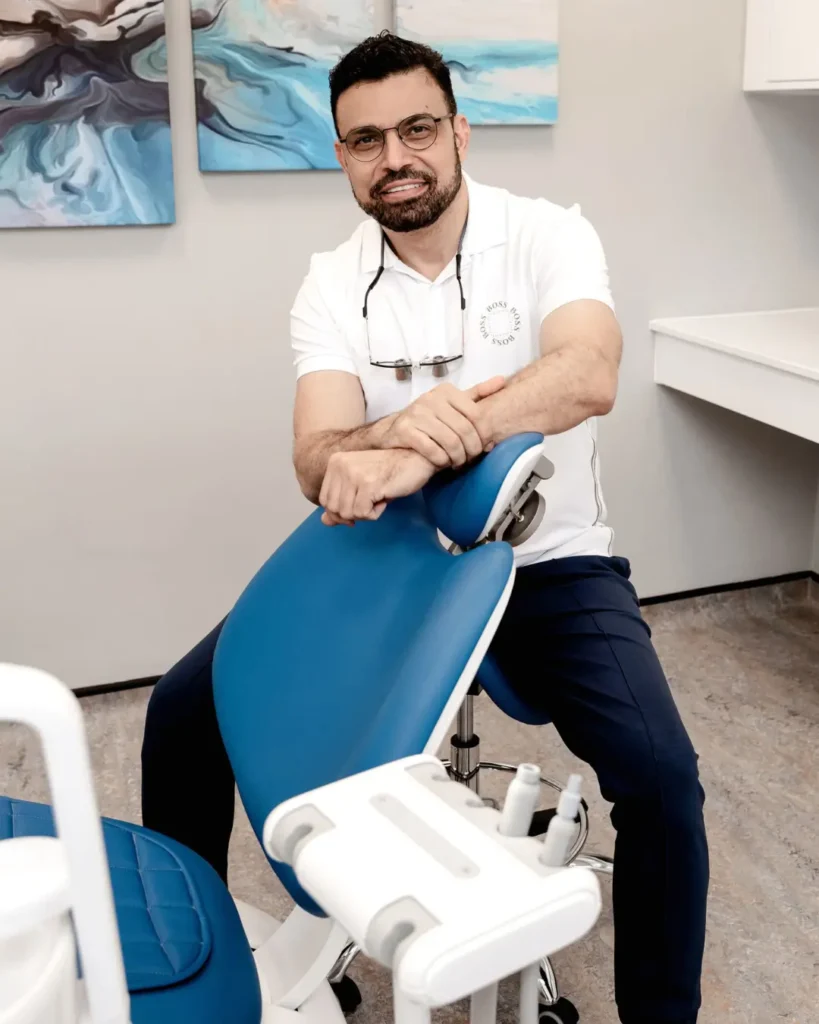
Written By:
Dr. Mustafa
Dr Mustafa is a GDC-registered specialist orthodontist (No. 105727) with a PhD in orthodontics and over twenty years’ experience treating patients across Edinburgh and the Lothians. A multi-award-winning clinician, he’s known for straightening teeth without unnecessary extractions and for a calm, honest approach with patients of every age. He leads the specialist team at Ocean Orthodontic Clinic in Leith.
Ready to start your smile journey?
Book a consultation with Dr Mustafa, our GDC-listed specialist orthodontist in Edinburgh.
Book Your Consultation or call 0131 202 4343