
How to Keep Your Teeth Healthy: A Specialist’s Everyday Guide
Reviewed by Dr Mustafa, Specialist Orthodontist · PhD · GDC No. 105727
Here’s something I’ve noticed after more than twenty years as an orthodontist in Edinburgh: most people are doing more than they think, and a little less than they actually need to. They brush twice a day and assume that’s the job done, then they’re surprised to learn that how they brush, when they brush, and what they do in the minute afterwards matter every bit as much.
The reassuring part is that keeping your teeth healthy really isn’t complicated. It comes down to a handful of simple habits, done properly and repeated day after day. In this guide, I’ll walk you through exactly what those habits are, what genuinely protects your teeth and gums, what’s a waste of your effort, and a few things worth knowing if you live here in Scotland. Whether you’re looking after your own smile, your children’s, or your teeth partway through orthodontic treatment, everything here is practical and easy to start today.
- Brush twice a day for two minutes with fluoride toothpaste — always last thing at night.
- Spit, don’t rinse — rinsing washes away the fluoride that protects your teeth overnight.
- Clean between your teeth daily; a brush alone misses where most problems start.
- With sugar, how often matters more than how much.
- There’s no fixed six-month rule — your dentist sets an interval that suits you.
- Scotland’s tap water isn’t fluoridated, so your toothpaste does more of the work here.
Why healthy teeth matter more than you think
It’s easy to treat your teeth as a cosmetic concern, something to sort out when they start to look or feel wrong. In truth, your mouth is one of the clearest windows into the rest of your health, and the two are more closely connected than most people expect.
Tooth decay and gum disease don’t stay politely where they start. Gum disease in particular, the inflammation that first shows up as tender, bleeding gums – has been linked in research to a number of wider health conditions, including cardiovascular disease.
That doesn’t mean a bit of bleeding will make you unwell overnight. It simply means your gums are often the first place your body raises a flag, and it’s worth paying attention when they do.
Now for the genuinely good news. Tooth decay is, to a large extent, a preventable disease. It isn’t bad luck, and it isn’t something you’re powerless against. The chain is straightforward: bacteria in plaque feed on sugar and produce acid, that acid slowly wears away your enamel, and cavities follow. Break that chain with a few good daily habits, and you avoid the vast majority of problems before they ever begin, no drill, no filling, no fuss.
That’s really what the rest of this guide is about: the small, unglamorous things that keep you out of the dentist’s chair for the wrong reasons.
How should you brush your teeth?
If there’s one habit worth getting right, it’s this one. The truth is that brushing well takes a little technique, not more effort, just better aim.
Start with the basics that the evidence keeps confirming. Brush at least twice a day with a fluoride toothpaste, and use one containing 1,350 to 1,500 parts per million (ppm) of fluoride; check the side of the tube; it’s printed there. Give it a full two minutes each time; most of us stop well short, so a timer or an electric brush with a built-in one helps enormously.
The single most important brush of the day is the last one. Brush last thing at night so the fluoride keeps protecting your teeth while you sleep, and on at least one other occasion during the day. Overnight, your mouth produces less saliva to wash acids away, which makes that bedtime brush the one you really don’t want to skip.
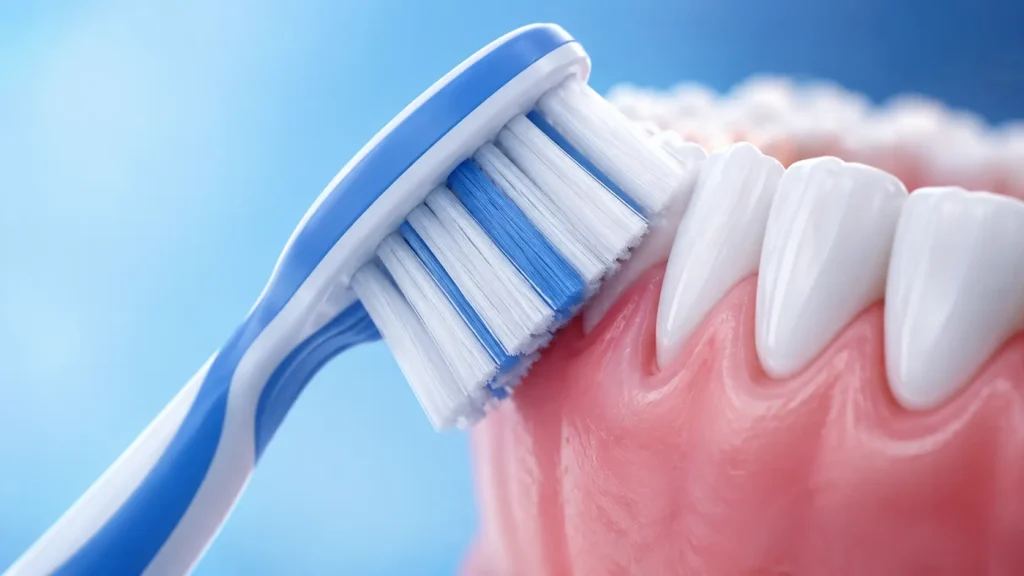
As for the brush itself, don’t overthink it. A manual or electric brush is perfectly fine, as long as you clean every surface of every tooth and use a fluoride toothpaste. Choose one with a small head and soft or medium bristles, small enough to reach the back teeth, soft enough not to scrub your gums raw. When you brush, angle the bristles at roughly 45 degrees towards the gum line and use small, gentle, circular movements rather than a hard back-and-forth scrub. You’re sweeping plaque away from the gum, not sanding your teeth.
Spit, don’t rinse
This is the tip I most often see people getting wrong, and it costs nothing to fix. When you’ve finished brushing, spit out the excess toothpaste, but resist the urge to rinse your mouth with water. Rinsing straight after brushing washes away the concentrated fluoride left on your teeth and reduces how well it protects them. Spit, don’t rinse. It feels odd for a day or two, then becomes second nature, and it’s one of the easiest ways to get more out of the toothpaste you’re already using.
Do you really need to floss?
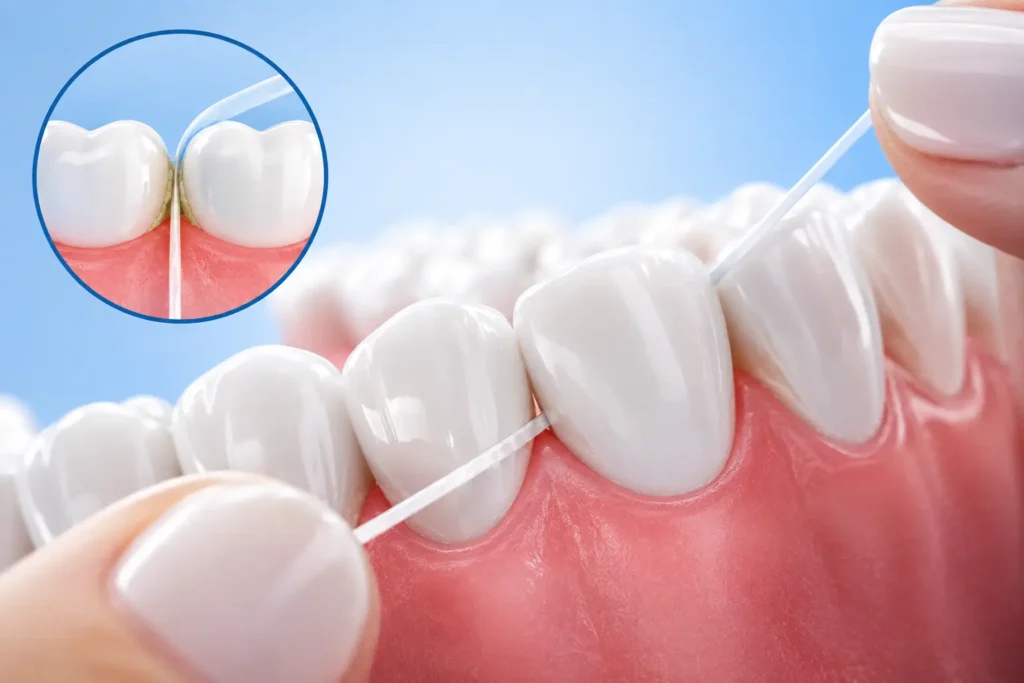
In a word: yes. I know flossing is the step most people quietly skip, but it matters for a simple reason. A toothbrush, no matter how good, only cleans the surfaces it can physically reach, and it can’t get between your teeth. Cleaning between your teeth removes the plaque that builds up along the gum line, which helps reduce your risk of gum disease, tooth decay and bad breath. That’s roughly a third of each tooth’s surface a brush never touches.
Aim to clean between your teeth once a day, ideally before you brush, so that anything you dislodge gets brushed away afterwards. Floss works well for most people, but it isn’t the only option. Interdental brushes, little tapered brushes that slot into the gaps, are especially useful if you have slightly larger spaces between your teeth, and many patients find them far easier to use than string floss. One thing to avoid: don’t reach for wooden toothpicks, as they’re too hard and can damage your gums.
A quick word of reassurance, because this catches people out. The first few times you clean between your teeth, your gums may bleed a little; that’s usually just because they aren’t used to a proper clean and there’s some plaque to shift. Keep at it gently, and it typically settles within a week or two. But if the bleeding carries on beyond that, don’t ignore it; that’s your cue to see your dentist or hygienist, as it can be an early sign of gum disease.
What you eat and drink: the truth about sugar
Most of us know sugar isn’t kind to our teeth. What surprises people is why, and how it changes how you should manage it.
It isn’t simply the amount of sugar; it’s how often you have it. Every time you eat or drink something sugary, it triggers roughly 20 to 30 minutes of acid attack on your enamel as plaque bacteria feed and produce acid. So a chocolate bar eaten in one go with a meal does less damage than the same sugar sipped or nibbled across a whole afternoon. Constant grazing keeps your teeth under near-continuous acid attack, with no time to recover in between. If you’re going to have something sweet, having it with a meal rather than as a standalone snack is genuinely kinder to your teeth.
A few things worth knowing that don’t always feel obvious:
- Whole fruit beats fruit juice. Eaten whole, fruit keeps its sugars locked within its structure, which makes it a safer choice than juice, where those sugars are freed and bathe your teeth.
- “Sugar-free” doesn’t mean tooth-friendly. Many diet and sugar-free fizzy drinks are still acidic, and that acid erodes enamel on its own, no sugar required.
- Your best drinks are the plain ones. Water and milk are the kindest things you can put past your teeth between meals. If you do have something acidic, drinking it through a straw helps direct it away from your teeth.
And one more that surprises people: don’t brush straight after acidic food or drink. Acid temporarily softens your enamel, and brushing too soon can wear it down, so wait about 30 minutes and let your saliva harden the enamel back up first. Have a glass of water in the meantime, and brush a little later.
Mouthwash: helpful, but timing matters
Mouthwash has its place, but it’s worth understanding what it can and can’t do because, when used at the wrong time, it can quietly undo some of your good work.
The mistake is common: reaching for mouthwash right after brushing to finish the job. In fact, that’s exactly when you shouldn’t. Don’t use a fluoride mouthwash straight after brushing, because it rinses away the concentrated fluoride your toothpaste has just left on your teeth. It’s the same principle as “spit, don’t rinse”; you want that fluoride to stay put and keep working.
If you’d like to use a fluoride mouthwash, choose a different time of day. After lunch is a good time; don’t eat or drink for 30 minutes afterwards, so the fluoride has a chance to do its job. Go for an alcohol-free one, which is gentler on the soft tissues of your mouth. And do think of mouthwash as an optional extra rather than a replacement: it’s a nice addition to brushing and cleaning between your teeth, never a substitute for either.
Smoking, alcohol and your whole body
It’s easy to picture your teeth as separate from everything else, but your mouth doesn’t work in isolation, and neither do the habits that affect it.
The advice here is refreshingly simple, because what’s good for your teeth is largely just good for you. A healthy lifestyle, eating well, not smoking, and keeping your alcohol and sugar intake in check – benefits your teeth, gums and mouth right alongside the rest of your body.
Smoking deserves a particular mention. It’s one of the biggest risk factors for gum disease, and because it reduces the blood supply to your gums, it can even mask early warning signs; the bleeding that would normally alert you to a problem may not show up, letting things progress quietly. If you’re a smoker and you’ve been thinking about stopping, your gums are one more good reason to. Alcohol, taken often or in quantity, adds its own strain, and many drinks carry a hefty dose of sugar and acid on top. None of this needs to be all-or-nothing; small, steady changes add up over the years your teeth have to last you.
A Scotland-specific note on fluoride and check-ups
Here’s something most oral-health guides won’t tell you, because most of them are written for the country as a whole rather than for us up here. If you live in Edinburgh or anywhere in Scotland, two things are worth knowing, and they genuinely change how you should think about your daily routine.
First, our tap water isn’t fluoridated. Scotland’s public drinking water supply isn’t artificially fluoridated, and its natural fluoride level is very low. Instead, Scotland relies on targeted schemes such as the Childsmile programme, supervised toothbrushing in nurseries, fluoride varnish and oral-health education to protect children’s teeth. That’s an excellent public-health effort, but for the rest of us it means one simple thing: the fluoride in your toothpaste is doing more of the heavy lifting here than it would in parts of England where fluoride is added to the water. So none of the earlier advice is optional up here: use a proper fluoride toothpaste, brush last thing at night, and spit rather than rinse. In Scotland, that’s your main line of defence.
Second, forget the old “every six months” rule. It’s one of dentistry’s most persistent beliefs, and it isn’t quite right. There’s no fixed six-month rule; national guidance sets a personalised range of 3 to 24 months for adults based on your individual risk, and people with consistently healthy mouths may only need a check-up once every year or two. The point isn’t to go less often for its own sake; it’s that the right interval is the one your dentist recommends for you, not a number plucked from habit. If you’re at higher risk of decay or gum problems, you may be seen more often; if your oral health is rock solid, perhaps less. Either way, the worst thing you can do is stop going altogether; regular check-ups catch small problems while they’re still small and cheap to fix.
5 dental myths worth unlearning
A lot of dental “common knowledge” gets passed down without ever being checked. Some of it is harmless. Some of it quietly works against you. Here are five I hear most often, and what’s actually true.
Myth 1: “Bleeding gums are normal.”
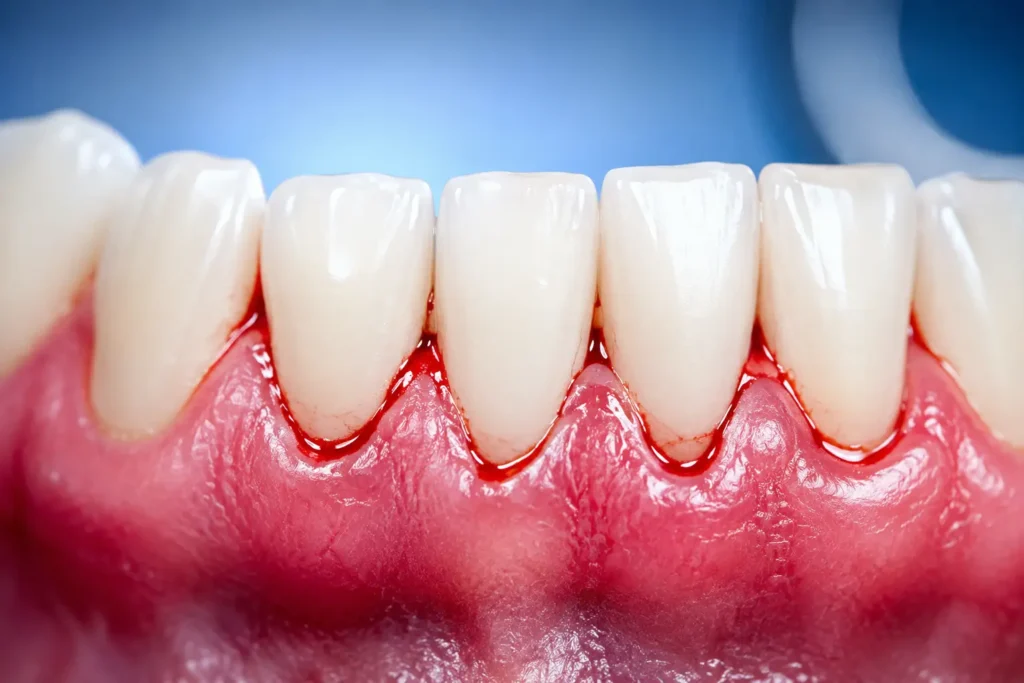
They’re really not. Healthy gums shouldn’t bleed when you brush or clean between your teeth. Bleeding is usually an early sign of gingivitis, the first, very treatable stage of gum disease, caused by plaque building up along the gum line. As we covered earlier, a little bleeding when you first start cleaning between your teeth can settle within a week or two. But bleeding that keeps going is a message worth listening to, not ignoring. The fix is usually more thorough cleaning, not less, plus a visit to your dentist or hygienist.
Myth 2: “Brushing harder gets your teeth cleaner.”
It’s an easy assumption, and it’s the wrong one. Scrubbing too hard damages your enamel and irritates your gums, which can lead to sensitivity and receding gums over time. Plaque is soft, you don’t need force to remove it, you need to reach it. A soft-bristled brush and gentle circular motions for two minutes clean far better than brute force ever will. Let the brush do the work.
Myth 3: “Sugar-free drinks are safe for your teeth.”
Sugar-free is better for your teeth than the full-sugar version, but “better” isn’t the same as “safe.” Many diet and sugar-free fizzy drinks are still acidic, and that acid erodes enamel all on its own, with no sugar involved. If you enjoy them, treat them the way you’d treat any acidic drink: have them with a meal rather than sipping across the day, use a straw, and follow with a glass of water.
Myth 4: “If I brush well, I don’t need to floss.”
Brushing and cleaning between your teeth are two different jobs, and one can’t do the other’s work. However well you brush, the bristles simply can’t reach the surfaces where your teeth touch, and that’s precisely where plaque and food tend to lurk. Skipping between-teeth cleaning leaves roughly a third of each tooth untouched. It’s not an optional extra; it’s half the routine.
Myth 5: “Brush straight after every meal.”
Well-intentioned, but it can backfire. After acidic food or drink, your enamel is temporarily softened, and brushing too soon can wear it away, so it’s better to wait about 30 minutes before you brush. Have some water while you wait; it helps your saliva neutralise the acid and lets your enamel firm back up before the brush comes anywhere near it.
When it’s worth speaking to an orthodontist
Good daily habits keep your teeth healthy, but sometimes the teeth themselves are the problem. If they’re crowded, crooked or gappy, they can be genuinely harder to keep clean, which means more places for plaque to hide however well you brush. And sometimes it’s simpler than that: you’ve just never felt confident about your smile.
These are the sort of things worth speaking to a specialist about:
- Crowded or overlapping teeth that trap food and are tricky to clean properly.
- Gaps or spacing you’d like closed.
- A bite that doesn’t sit right – an overbite, underbite or crossbite, or teeth that meet unevenly and are wearing down.
- Teeth that have shifted over the years, including drifting after old braces if a retainer wasn’t worn.
- Simply wanting a straighter smile – there’s no upper age limit, and many of our patients start treatment in their 30s, 40s and beyond.
None of these are emergencies, and you don’t need a referral to ask. A consultation is simply a chance to have your teeth looked at properly and hear honest, specialist advice on whether treatment would help, and if so, which option suits you best.
Ready to talk about your smile?
Book a no-obligation consultation with our specialist orthodontic team here in Leith, Edinburgh. No referral needed, no pressure, just honest, expert advice tailored to you.
Got Questions?
Frequently asked questions
Written By:
Dr. Mustafa
Dr Mustafa is a GDC-registered specialist orthodontist (No. 105727) with a PhD in orthodontics and over twenty years’ experience treating patients across Edinburgh and the Lothians. A multi-award-winning clinician, he’s known for straightening teeth without unnecessary extractions and for a calm, honest approach with patients of every age. He leads the specialist team at Ocean Orthodontic Clinic in Leith.
Ready to start your smile journey?
Book a consultation with Dr Mustafa, our GDC-listed specialist orthodontist in Edinburgh.
Book Your Consultation or call 0131 202 4343