Interceptive Orthodontics in Edinburgh
Early Treatment for Children
Interceptive orthodontics is an early treatment that works with your child’s natural growth, guiding the jaws, protecting the airway, and correcting problems before they become serious, planned and monitored by Dr Mustafa, a GDC-registered specialist orthodontist, at our clinic in Leith, Edinburgh.
The Basics
What Is Interceptive Orthodontics?
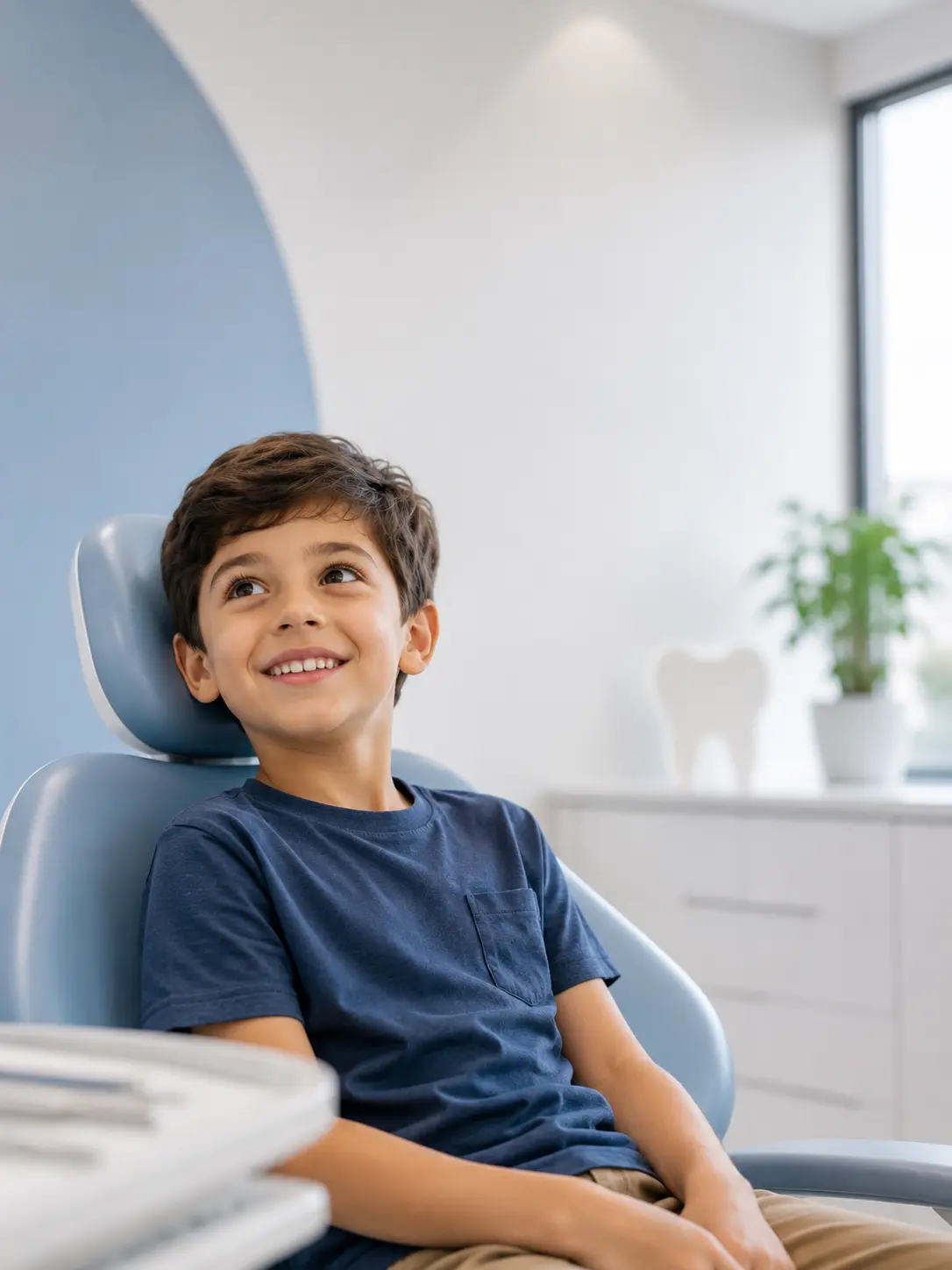
Interceptive orthodontics, also called early or Phase 1 treatment, is care delivered while your child still has a mix of baby and adult teeth, usually between ages 7 and 11. Rather than straightening every tooth, the focus is on guiding jaw growth, creating space, and correcting developing problems while they’re easiest to influence.
It’s about far more than a straighter smile. In the UK, the British Orthodontic Society recommends a first assessment between ages 7 and 11; an early visit rarely means braces straight away. Often we monitor your child’s development, giving us the chance to guide facial growth, protect breathing, and catch problems early, while their growth is still on our side.
The Basics
Can Interceptive Treatment Begin Before 7?
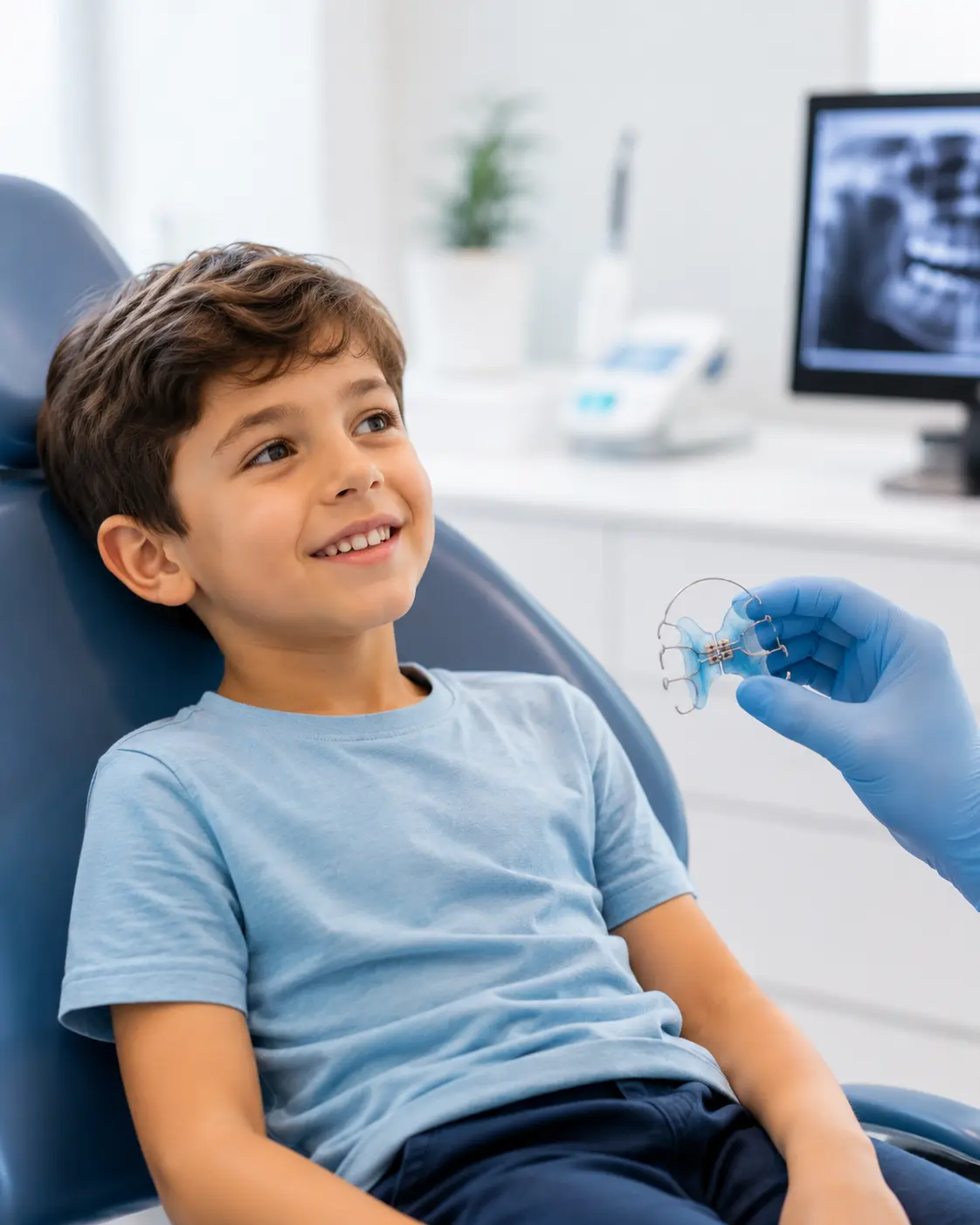
In certain cases, yes. While age 7 is the standard age for a first assessment, we may act earlier when there’s a clear reason, most often a persistent thumb, finger, or dummy-sucking habit, a crossbite pushing the jaw off to one side, or mouth-breathing linked to a narrow palate. For many young children, though, the right decision is to monitor, check in as they grow, and step in only when the timing is ideal. We’ll never start treatment before it’s needed; an early assessment helps ensure we don’t miss the window when it matters most.
Not sure if it’s the right time for your child?
Book an assessment with Dr Mustafa — honest advice, no pressure, no referral needed.
Why the Timing Is So Critical
By the time a child reaches their teens, much of their facial growth has already happened. The bones of the face and palate fuse earlier than most parents realise, and once they do, widening the jaw without surgery becomes far harder, sometimes impossible. This is what makes the mixed dentition phase, roughly between ages 7 and 9, such a valuable window.
Palate can still be widened
Mid-palatal suture, the joint in the roof of the mouth, hasn’t yet fused so the upper jaw can be gently widened without surgery.
The lower jaw still responds
The growth centres of the lower jaw are still active, which means functional appliances can guide it into a healthier position.
Habits can still be corrected.
Habits like thumb sucking can be intercepted before they cause lasting change to the developing jaw.
More Than Straight Teeth
Most people think of orthodontics as straightening teeth. But in a growing child, the bigger opportunity is guiding the face itself.
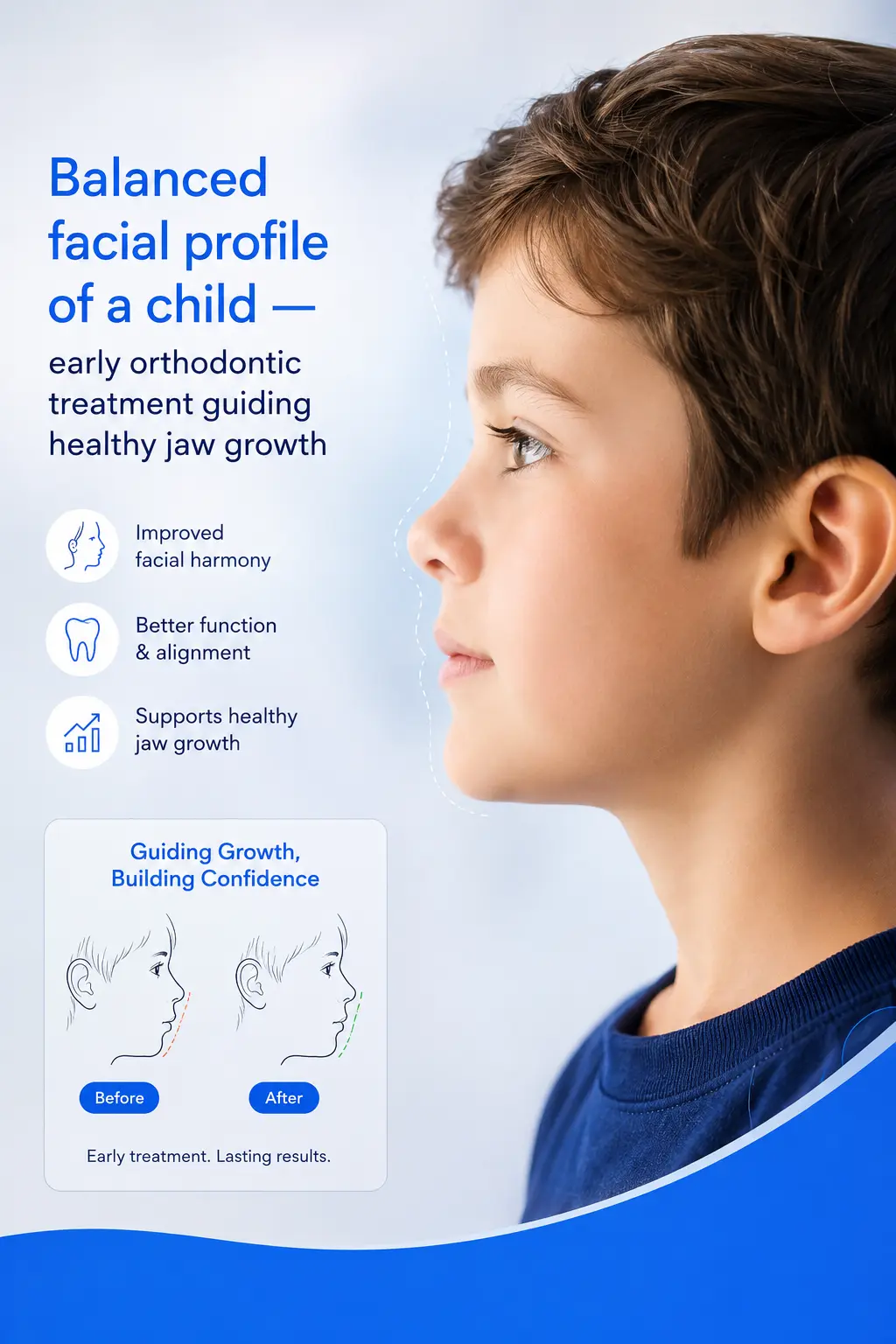
The way a child’s face develops is tied directly to how their jaws grow. When jaw growth is restricted or heading in the wrong direction, it can pull facial growth downward — leading to a longer, narrower face and a less defined chin. By encouraging the jaws to grow forward and horizontally instead, early treatment supports a more balanced, harmonious profile.
There’s a functional payoff too. Better-developed jaws create more room for the tongue to sit correctly — and that plays a direct role in how well a child breathes and swallows. It’s a reminder that this work is about how the face functions, not just how the teeth line up.
How Early Treatment Supports Your Child’s Airway
Perhaps the most compelling reason to look at a child’s jaw early has nothing to do with their smile — it’s how they breathe.
The link between a constricted jaw and breathing difficulty is becoming clearer all the time. A narrow palate and a set-back jaw can physically reduce the size of the airway, contributing to sleep-disordered breathing — from snoring to the more serious obstructive sleep apnoea.
A 2025 study found that adolescents at high risk of sleep-disordered breathing showed more significant skeletal differences in how their jaws related to one another — underlining how closely jaw development and breathing are connected.
The encouraging part is that early orthodontics can genuinely help. Widening a narrow palate with an expander, or guiding the lower jaw forward with a functional appliance, has been shown to increase the size of the upper airway. Research suggests these interventions can improve sleep quality and ease the symptoms of disordered breathing in children.
By developing the arches and improving the way the jaws meet, we can open up the airway — supporting better, more natural nasal breathing, and helping to prevent a range of related problems down the line.
The Habits We Intercept
The link between oral habits, muscle function, and how the teeth and jaws develop is a cornerstone of modern orthodontics. Orofacial Myofunctional Disorders (OMDs) are problems with the muscles and functions of the face and mouth — and left unaddressed, they can quietly shape the way a child grows.
Mouth Breathing
Often the primary culprit. When a child breathes through their mouth instead of their nose, the tongue drops to a low resting position. Because the tongue is the muscle that naturally shapes the upper jaw, it stops providing the gentle outward pressure the palate needs — leading to a narrow, high-arched palate.
Thumb Sucking & Swallowing Patterns
Poor swallowing patterns and persistent thumb sucking place abnormal pressure on the developing jaws, gradually pushing teeth out of position. Research confirms that ongoing sucking habits are significantly linked to a higher risk of developing malocclusions.
These dysfunctions aren’t just minor habits — they have a profound impact, with a clear link to malocclusion and facial asymmetry. By identifying and treating the underlying cause early, we allow your child’s face and jaws to develop in a healthier, more natural way. Spotting these habits is a routine part of our wider children’s orthodontic care.
Visit Ocean Orthodontic Clinic in Edinburgh
We’re based in Leith, North Edinburgh — easy to reach by car or public transport, with Saturday appointments available.
| Monday | 9:00am – 6:00pm |
| Tuesday | 9:00am – 6:00pm |
| Wednesday | 9:00am – 6:00pm |
| Thursday | 9:00am – 6:00pm |
| Friday | 9:00am – 6:00pm |
| Saturday | 10:00am – 1:00pm |
| Sunday | Closed |
Book Your Consultation Today
No obligation, no pressure — just honest expert advice from Edinburgh’s award-winning orthodontic team.
Got Questions?
Everything You Need to Know Before You Book
Here are the questions we hear most often from parents across Edinburgh.