What Age Can You Get Braces? A Guide for Children and Adults
Written by Dr Mustafa, Specialist Orthodontist · PhD · GDC No. 105727
Most people picture braces as a teenager thing, something you get at twelve or thirteen and forget about by adulthood. But that’s only part of the story.
The truth is, there isn’t one single “right” age. For children, there’s an ideal window when treatment works best. For adult orthodontic treatment, there’s no upper age limit; as long as your teeth and gums are healthy, you can straighten them whether you’re 25, 45, or 65.
I’m Dr Mustafa, a specialist orthodontist, and one of the most common questions I’m asked is simply: “Am I too old?” or “Is my child the right age?” So in this guide, I’ll walk you through the best age for children to start, what the first check at age 7 is really about, and the honest answer for adults wondering if they’ve left it too late.
Here’s What Our 50-Year-Old Patient Said
I had an amazing experience of getting my teeth straightened at the ripe old age of 50. Dr Mustafa went above and beyond expectations in terms of the results he was able to give me. He had perfect attention to detail and explained everything to me clearly as we went along. The service was first class. All the staff are lovely and it is such a soothing environment to be in — like being in a spa! Totally recommend!
What’s the Best Age for Braces?
For most children, the best time to start braces is between 10 and 14 years old. By this age, most of the adult teeth have come through, but the jaw is still growing, and that growth makes it easier to guide teeth into the right position.
In the UK, the average child orthodontic treatment start at around 12 or 13. There’s a good reason for that timing: we can work with a child’s natural growth rather than against it, which often means a smoother result.
That said, “best age” doesn’t mean “only age.” Every child develops differently, and the right moment depends on how their teeth and jaw are coming along, not just the number on their birthday. Some are ready a little earlier, others a little later.
Here’s a simple guide to how age and orthodontic treatment usually line up:
Why Age 7 Is the Right Time for a First Check
Most parents wait until their child’s teeth look obviously crooked before booking an appointment. But the ideal time for a first orthodontic check is earlier than you might think, around age 7.
At this age, children have a mix of baby teeth and adult teeth. That’s exactly what makes it so useful. It lets an orthodontist see how the adult teeth are coming through and whether the jaw is developing the way it should. Small problems, like crowding or a bite that isn’t lining up, are far easier to spot early.
Now, here’s the part that reassures most parents: an early check doesn’t usually mean early braces. In most cases, we simply keep an eye on things and wait for the right moment. But occasionally, treating a specific problem early, while the jaw is still growing, can prevent a much bigger job later on. This is called interceptive treatment, and it’s only used when there’s a clear reason for it.
Think of that first visit as a head start. Even if nothing needs doing yet, you’ll know exactly what to expect, and when.
Can Adults Get Braces?
Yes, and it’s one of the most common questions I hear. The honest answer is simple: there’s no upper age limit for braces.
Your teeth can be moved at any age, as long as your teeth and gums are healthy. It’s not about the number on your birth certificate; it’s about the health of your mouth. The same natural process that straightens a teenager’s teeth works just as well at 30, 45, or 65. More adults are choosing treatment now than ever before.
I know the worry isn’t usually about whether it’s possible. For a lot of adults, the real hesitation is “will people notice?” or “will I look silly with braces at my age?” It’s a completely normal thing to feel, and the good news is you have discreet choices. Clear aligners are nearly invisible and removable, and tooth-coloured ceramic braces blend in far more than the metal braces you might remember from school.
So if you’ve spent years thinking it was too late, it almost certainly isn’t.
Braces in Your 30s, 40s, 50s and Beyond
Let’s be clear about one thing: there’s no cut-off age where braces stop working. Plenty of our patients start treatment well into their 40s, 50s, and beyond, and they get excellent results.
That said, I’ll always be honest about what’s a little different when you’re treating teeth as an adult:
- Treatment can take slightly longer. Adult bone is denser than a growing child’s, so teeth tend to move a bit more slowly. It’s not a problem; it just means a little patience.
- Gum health matters more. Adults are more likely to have some existing gum issues, so I always check this carefully first. Healthy gums are the foundation of good treatment, and if anything needs sorting beforehand, we deal with it before starting.
- Retainers are part of the deal. Once your teeth are straight, a retainer keeps them that way. For adults, wearing one long-term is the best way to protect the result.
None of this should put you off. It simply means good treatment is planned carefully around you. In fact, straightening your teeth as an adult often improves far more than your smile; teeth that are properly aligned are easier to keep clean, which is better for your long-term oral health.
Wherever it’s possible, we also aim to straighten teeth without removing healthy ones. Many adults come to us worried they’ll need extractions, and are relieved to find there’s often another way.
Signs It Might Be Time to See an Orthodontist
Not sure whether you or your child actually need braces? You don’t have to figure it out on your own. But there are a few common signs that are worth getting checked.
In adults, look out for:
- Teeth that are crowded, crooked, or overlapping
- Gaps you’re not happy with
- An overbite, underbite, or a bite that doesn’t meet properly
- Teeth that are hard to clean, or that have shifted over the years
- Jaw discomfort or clicking
In children, keep an eye out for:
- Baby teeth lost very early or very late.
- Difficulty biting, chewing, or speaking clearly
- Thumb-sucking that’s carried on past the early years.
- Teeth that look crowded as the adult ones come through
- Breathing through the mouth rather than the nose
If any of these sound familiar, it doesn’t automatically mean braces are needed. The only way to know for sure is a proper assessment, and there’s no harm and no pressure in simply finding out where things stand.
Why See a Specialist Orthodontist
Whatever your age, who carries out your treatment makes a real difference.
A specialist orthodontist has done years of extra training, beyond dental school, purely in moving teeth and correcting bites. It’s all we do. That extra experience matters most with trickier cases, and with adults, where careful planning around gum health and bone makes the difference between a good result and a great one.
At Ocean Orthodontic Clinic in Leith, Edinburgh, treatment is led by Dr Mustafa, a GDC-registered specialist orthodontist with over 20 years’ experience and a focus on straightening teeth without unnecessary extractions. Whether you’re booking a first check for your seven-year-old or finally sorting out your own smile at 50, you’ll be looked after by a specialist from start to finish.
Ready to talk about your smile?
Book a no-obligation consultation with our specialist orthodontic team here in Leith, Edinburgh. No referral needed, no pressure, just honest, expert advice tailored to you.
Got Questions?
Frequently asked questions
Written By:
Dr. Mustafa
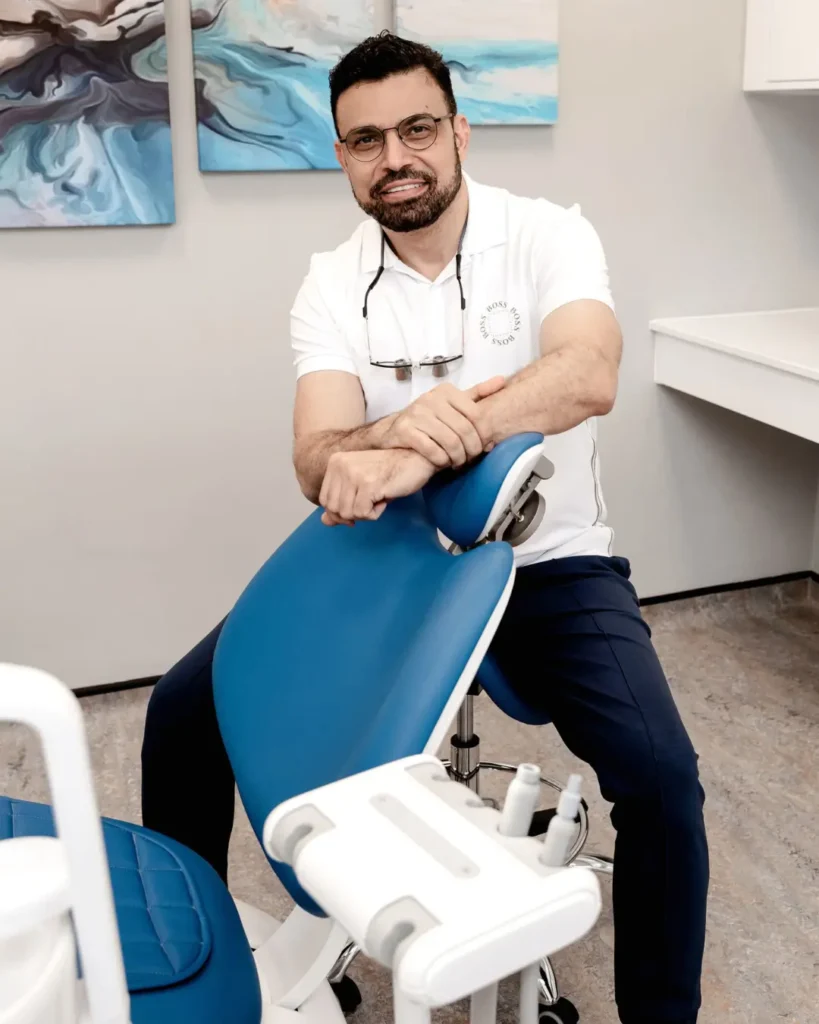
Dr Mustafa is a GDC-registered specialist orthodontist (No. 105727) with a PhD in orthodontics and over twenty years’ experience treating patients across Edinburgh and the Lothians. A multi-award-winning clinician, he’s known for straightening teeth without unnecessary extractions and for a calm, honest approach with patients of every age. He leads the specialist team at Ocean Orthodontic Clinic in Leith.
Ready to start your smile journey?
Book a consultation with Dr Mustafa, our GDC-listed specialist orthodontist in Edinburgh.
Book Your Consultation or call 0131 202 4343